
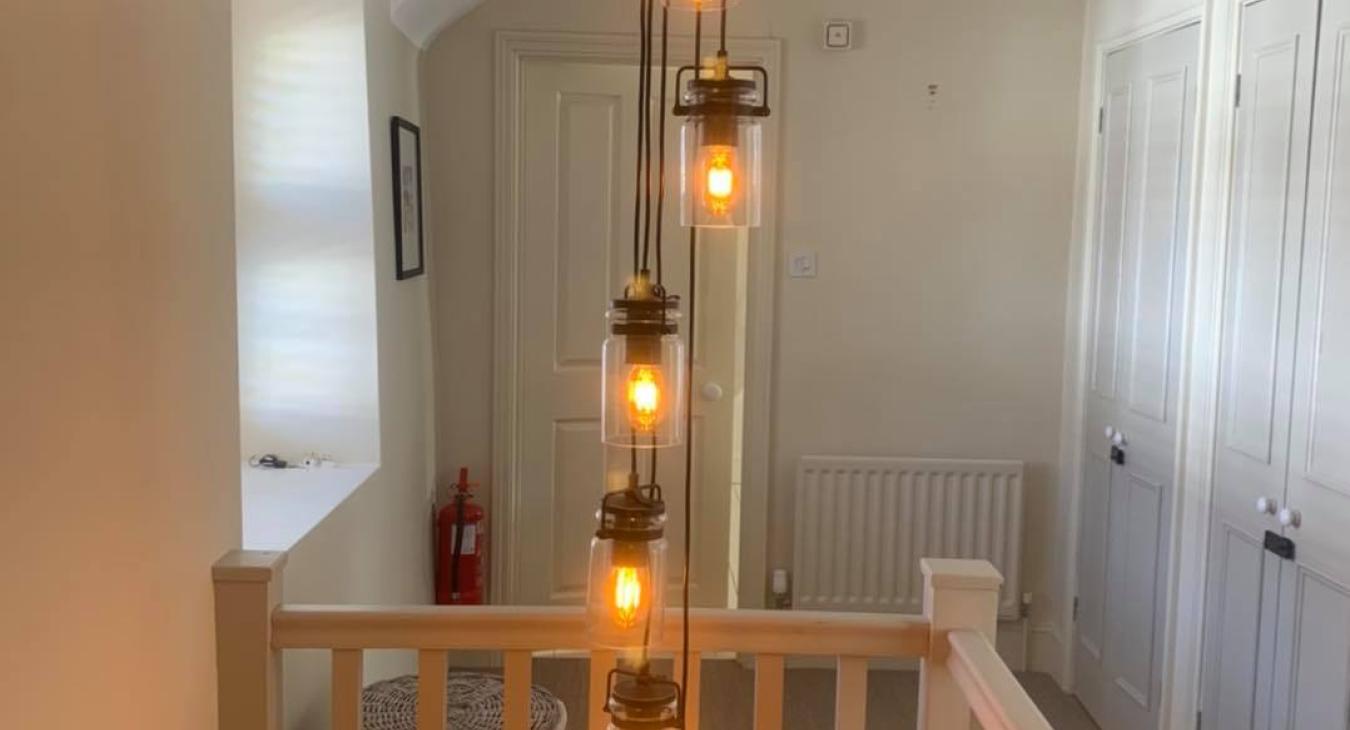

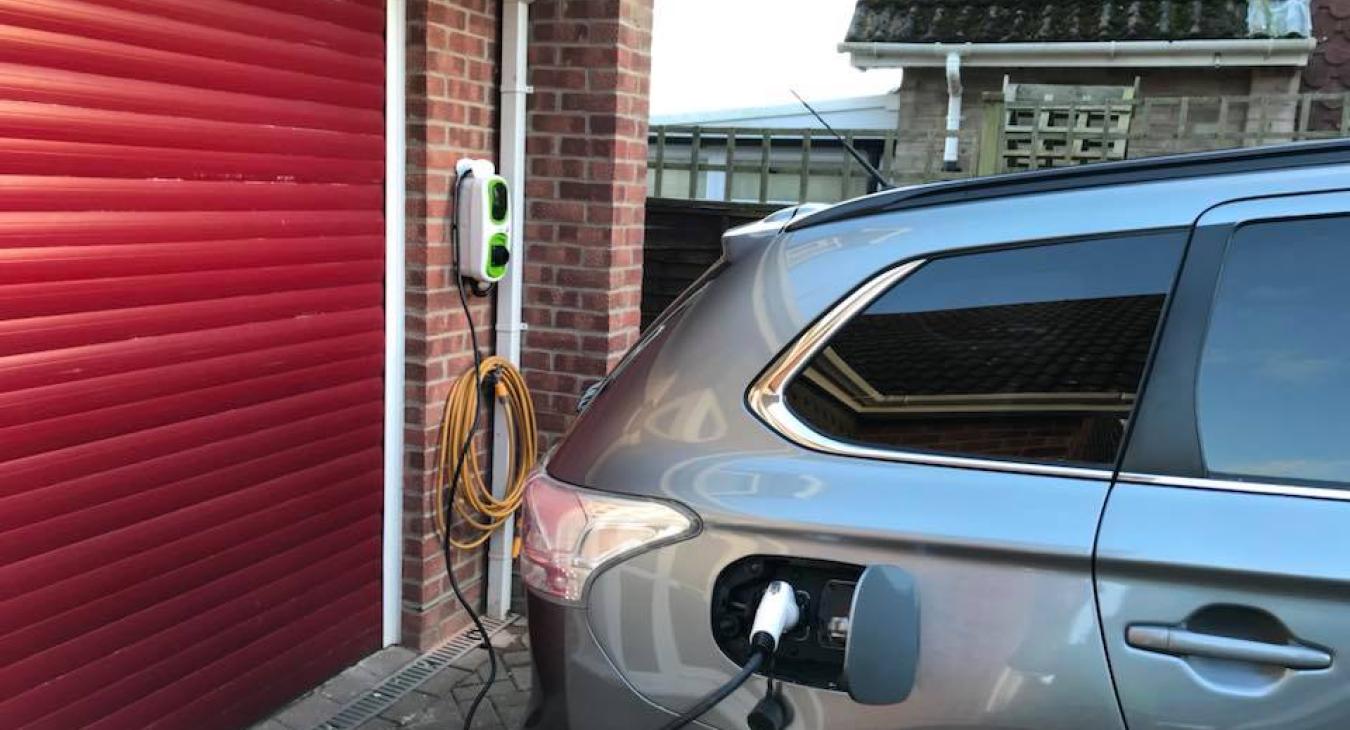




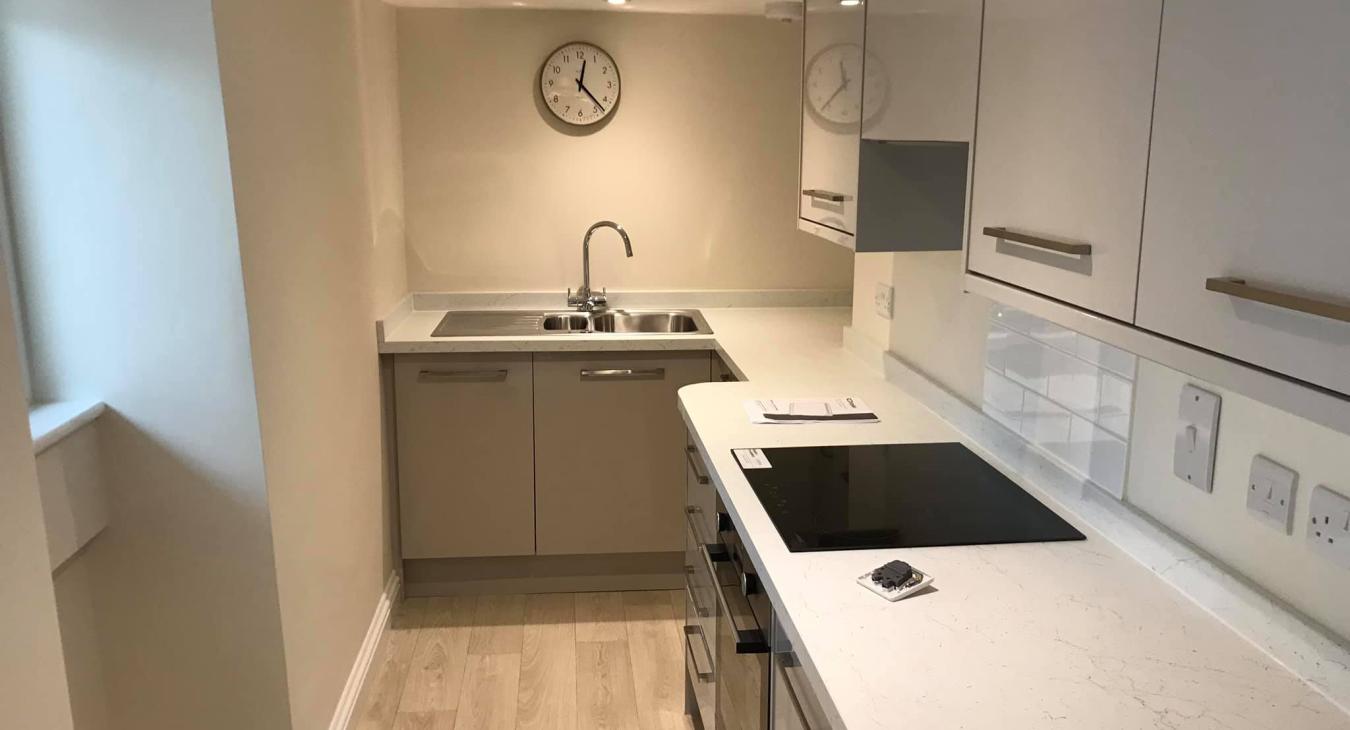

EV charger Axminster.
Really pleased with my new charger fitted today by Tyne Electrical Services.
Image
Image
Image
Image
Image
Image
Image
Image
Rewiring a large older property is one of the more involved projects we take on at Tyne Electrical Services. When we were approached to carry out a full rewire and electrical renovation at a substantial older home in Axminster, we knew straightaway that this one would require careful planning, close coordination with other trades, and a level of attention to detail that simply cannot be rushed.
The property was a characterful home undergoing a thorough renovation. It had high ceilings, solid walls throughout, and an electrical installation that had been added to and modified over many decades — a pattern we see regularly in older homes across this part of East Devon. Patching it further was not a realistic option. By the time we finished, the house had a completely new electrical installation, a modern FuseBox RCBO consumer unit with surge protection, fully integrated Heatmiser heating controls, and clean, properly concealed cabling throughout. This is the story of how we got there.
Starting with a Plan
Before a cable is run or a wall is chased, a rewire of this scale needs a proper plan. On a project like this one, that means understanding the layout of the building, mapping out where every circuit needs to go, thinking carefully about cable routes, and working out how the electrical programme fits around everything else happening on site.
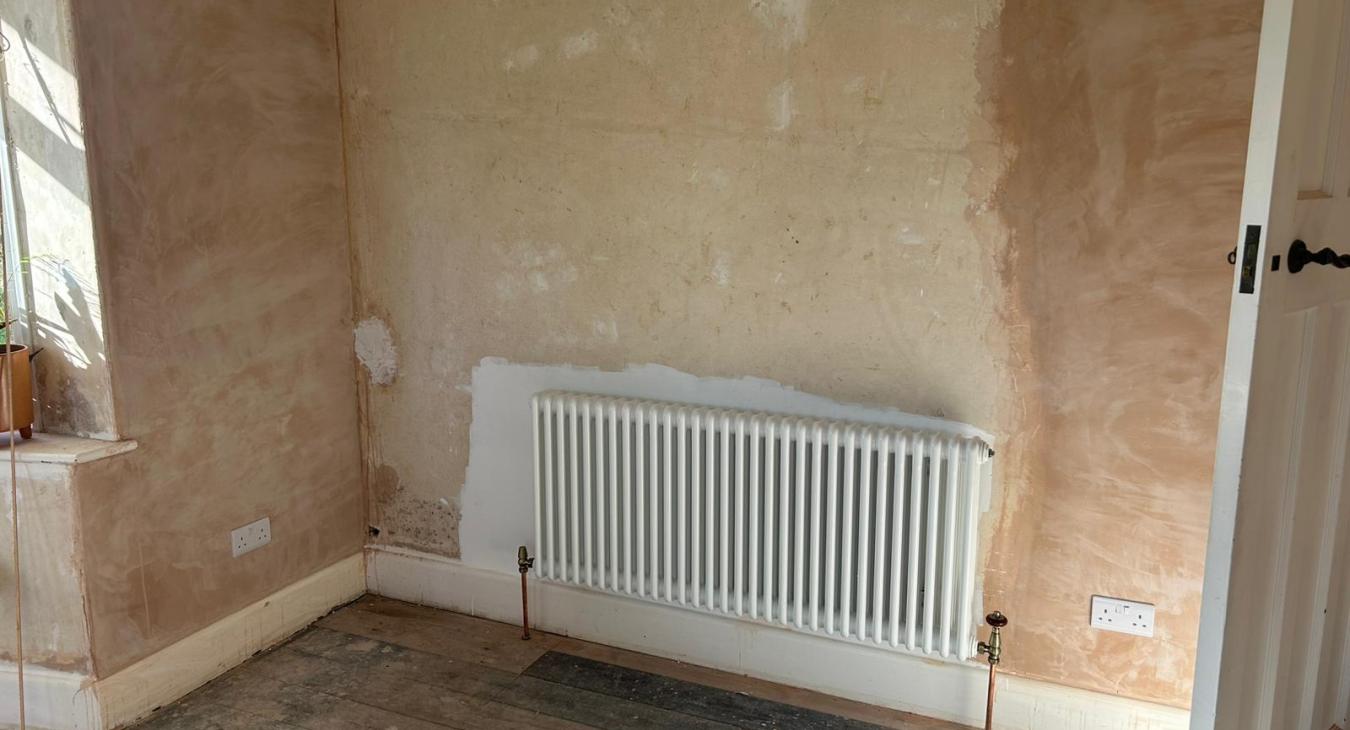
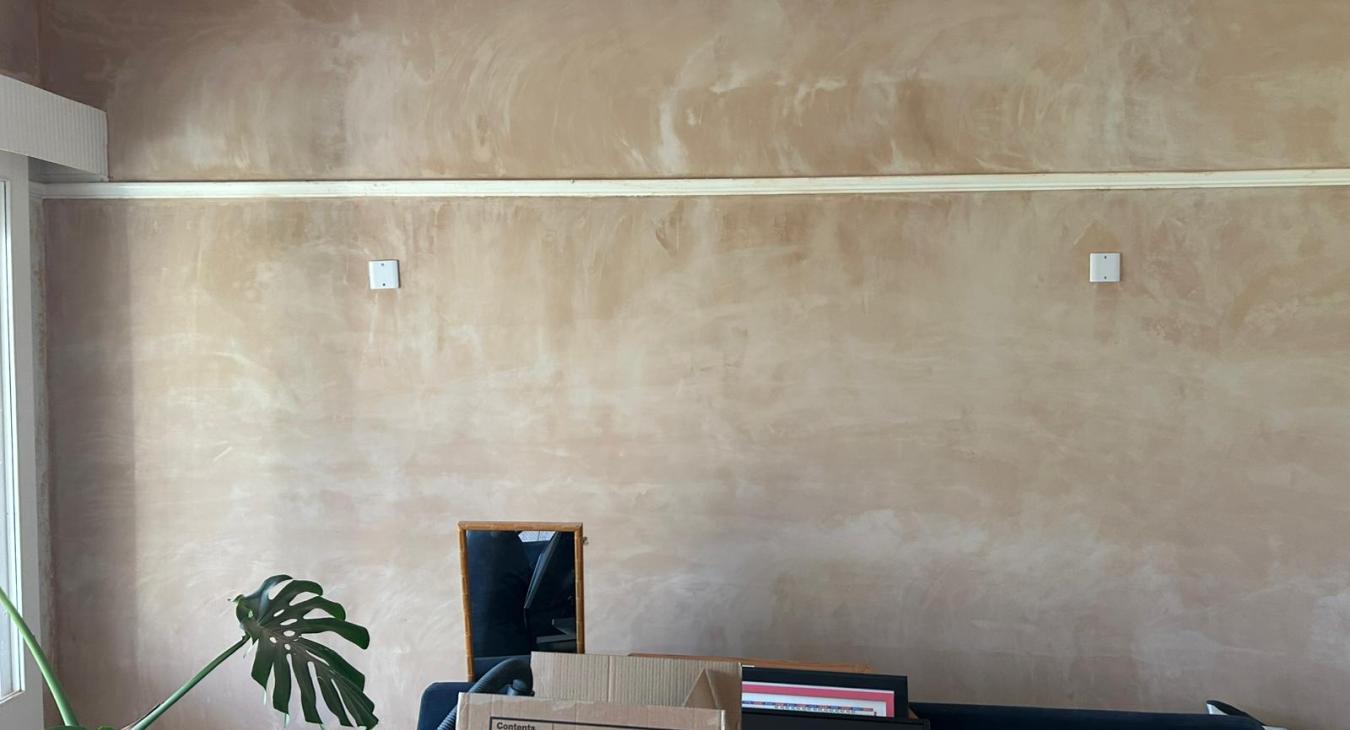
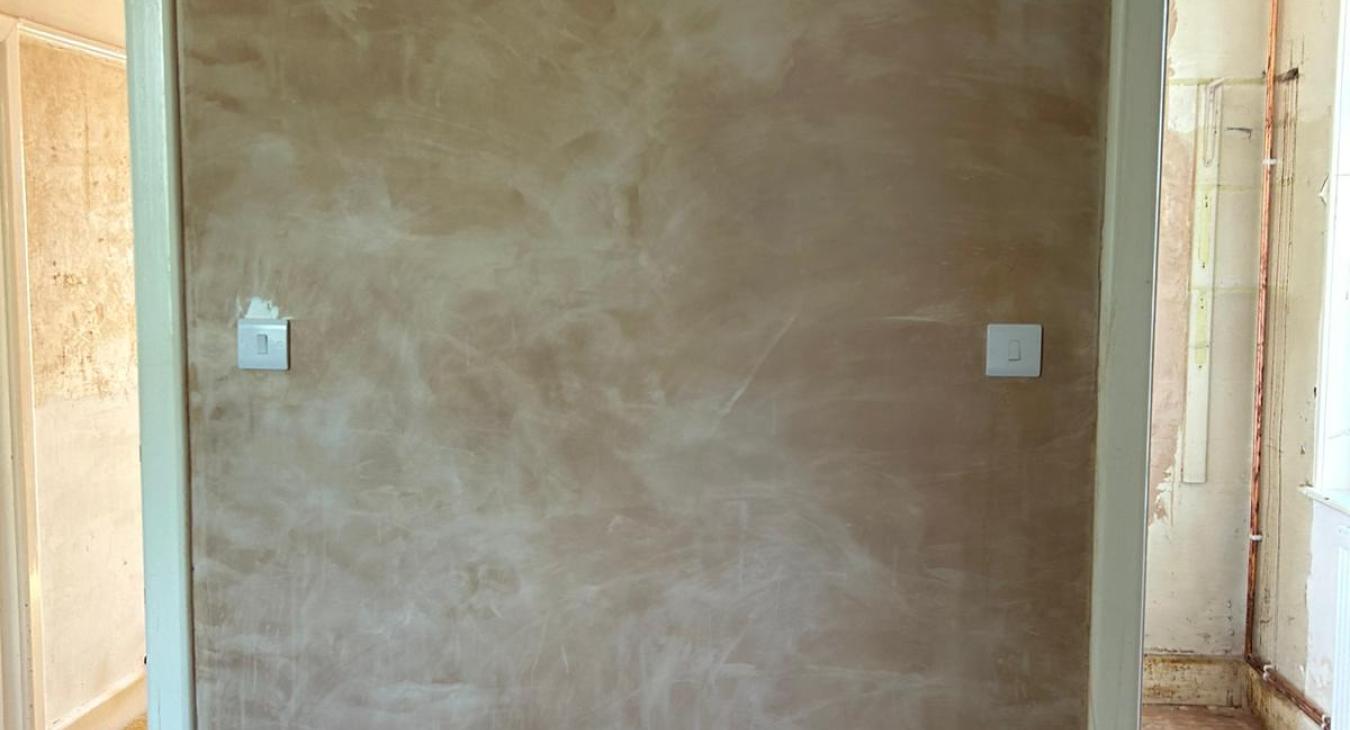
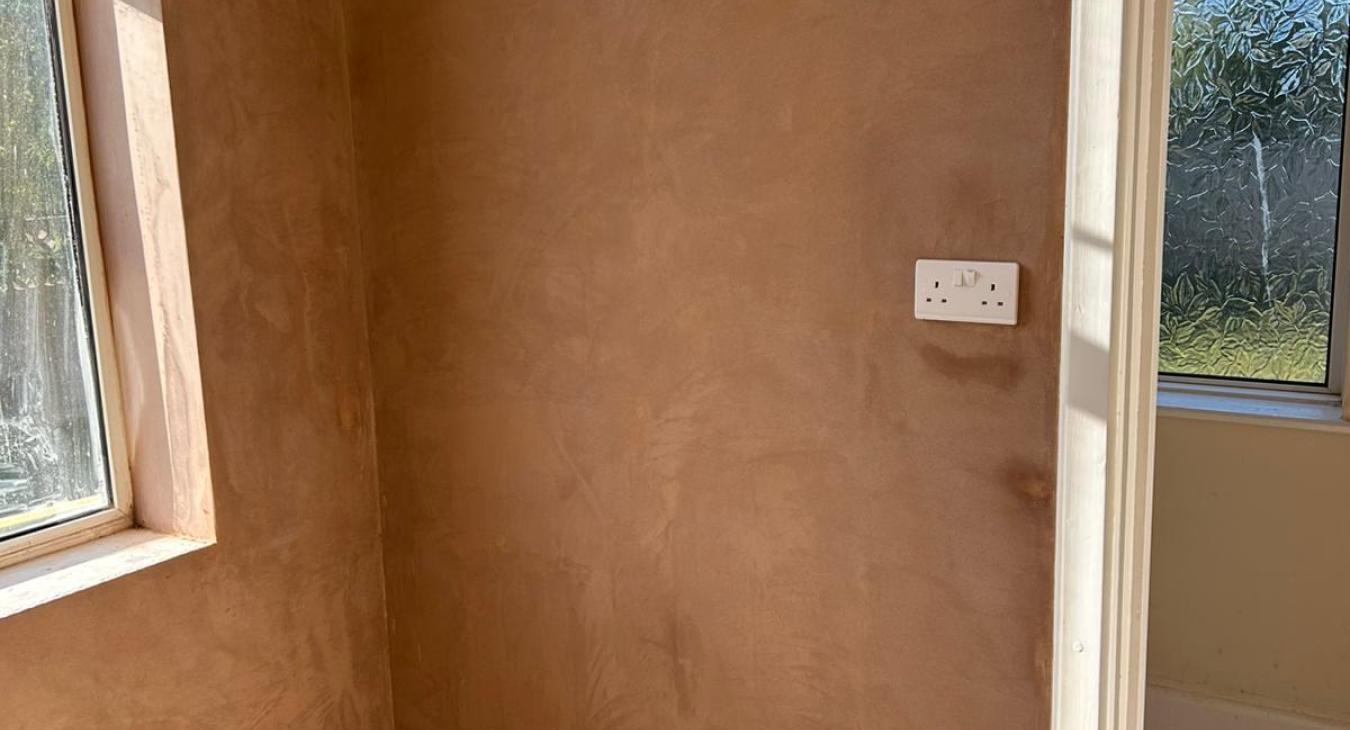
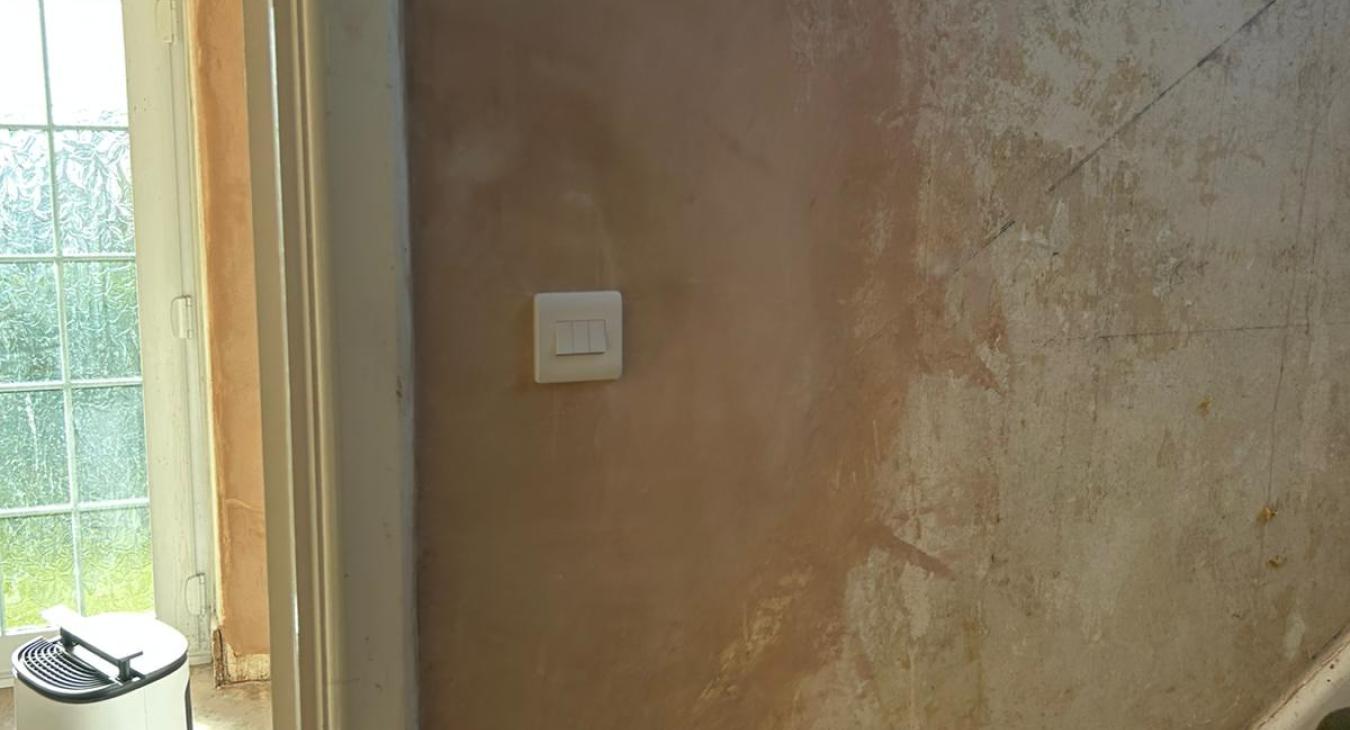
On this project, plasterers were also working throughout the renovation. The sequencing of work had a direct bearing on what we could do and when. First-fix cabling — running all cables through the fabric of the building before walls are plastered — had to be carefully timed so that we were not working behind the plasterers or holding them up unnecessarily. Wall chasing in one area could not be allowed to undo work that had already been completed elsewhere.
This kind of coordination is not the most visible part of a rewire, but it is one of the most important. A well-planned programme means the finished result is clean, properly sequenced, and does not leave trades waiting on each other. Get the sequencing wrong and you end up with cracked plasterwork, cables surface-run where they should be concealed, or electrical work that has to be revisited once the renovation has moved on.
The Challenge of High Ceilings and Solid Walls
Older properties in and around Axminster tend to be solidly built. That is part of what makes them desirable. It is also what makes rewiring them considerably more demanding than a typical modern house.
Solid walls mean cables cannot simply be pushed through a cavity. Every cable run that needs to be concealed requires a chase — a channel cut into the masonry — which is then made good by the plasterer before the renovation moves on. On a property of this size, with this many circuits, that represents a significant amount of careful work.
We use a dedicated triple-bladed chasing grinder with dust extraction for this work. It cuts clean, parallel channels to a consistent depth and keeps dust and debris to a minimum compared to alternative methods. Every chase is cut to the correct depth so that cables sit flush and the plasterer can finish the surface properly over them. The result is concealed cabling with minimal disruption to the surrounding plasterwork.
High ceilings added another layer of complexity. Getting cables to first-floor lighting positions, running circuits cleanly through ceiling voids, and accessing the spaces above older ceilings without causing unnecessary damage all required more time and more problem-solving than a standard modern property. There were no quick routes on this project. Every cable run was planned individually, and where a route was not straightforward, we found a solution that kept the cabling concealed rather than resorting to surface trunking.
Older homes are often loved for their proportions, their original features, and their solid, substantial feel. Surface-run cabling or conduit fixed across period plasterwork, can undermine all of that. Concealed wiring is slower and more involved, but the result is an installation that sits invisibly within the building rather than competing with it.
The New Consumer Unit
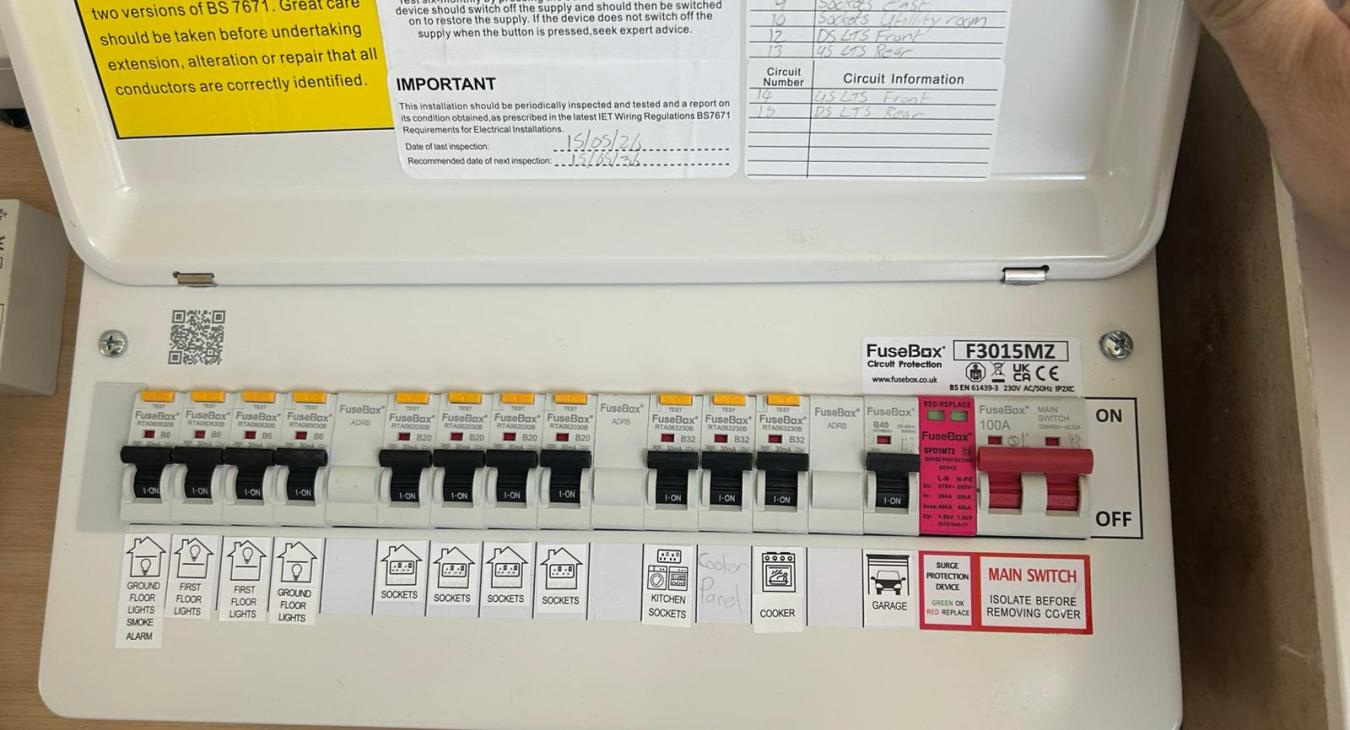
At the heart of any rewire is the consumer unit (what most people still call the fuse box). On this project, we installed a new FuseBox RCBO consumer unit with a Surge Protection Device.
Every circuit in the property has its own RCBO, which combines overload protection and earth fault protection in a single device dedicated to that circuit alone. This means that if a fault develops on one circuit — a faulty appliance in the kitchen, for example — only that circuit trips. The rest of the house is unaffected. It is a more reliable and considerably more practical arrangement than older designs where a single device covers multiple circuits simultaneously.
Alongside the consumer unit, we installed a Surge Protection Device. Modern homes contain a significant amount of sensitive electronics — smart controls, LED drivers, and similar devices that can be vulnerable to sudden spikes in voltage. An SPD clamps those spikes before they can cause damage, protecting both the installation and the equipment connected to it. We install SPDs as standard on all of our rewires and consumer unit replacements across East Devon and West Dorset.
Heating Controls
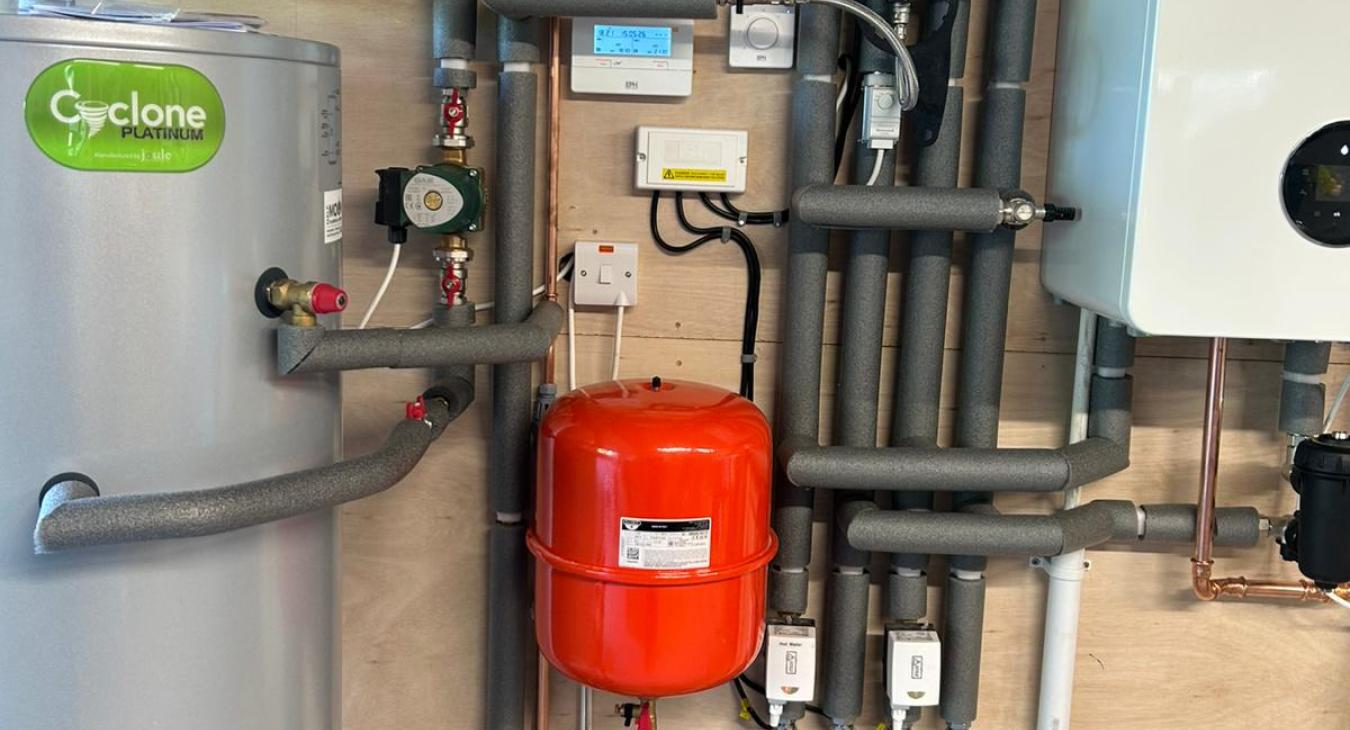
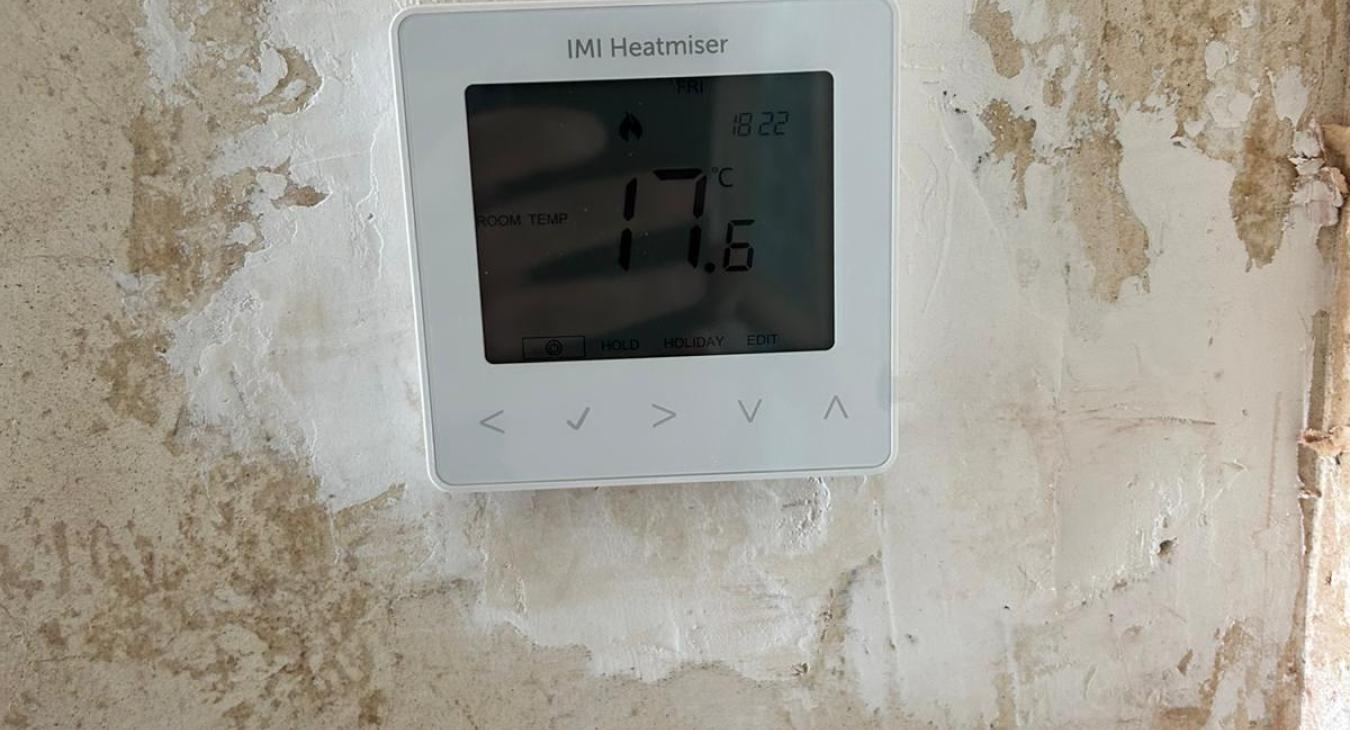
As part of the wider renovation, the project included wiring for the heating and hot water system — connecting the boiler, cylinder, pump, and associated controls, and installing Heatmiser thermostats to give the homeowner zoned control throughout the property. Running this cabling neatly through solid walls required the same careful approach as the rest of the installation, with routes planned to avoid disruption to finished surfaces and the work coordinated with the heating engineer on site.
Lighting and Power Circuits
A full rewire means all new circuits — every socket position, every lighting circuit, every switch — all brought back to the new consumer unit and individually protected. On a property of this size, that means a considerable number of circuits, each sized correctly for its intended load and routed cleanly through the building.
Socket positions were considered carefully against how the rooms would actually be used once the renovation was complete, rather than simply replacing existing positions like-for-like. Lighting circuits were designed around centre light positions in each room, with switched control laid out to suit the layout of the property.
Getting these decisions right at first-fix stage matters more than it might seem. The cables installed before plastering will be behind finished walls for the lifetime of the building. Circuit layout, socket positions, and cable routes directly affect how the property functions day to day, and revisiting any of it after the plasterer has been through is a significant undertaking. Taking the time to plan properly at the outset is always worthwhile.
Certification and NICEIC Approval
All of the electrical work on this project was carried out in full compliance with BS7671, the current edition of the IET Wiring Regulations. On completion, we issued a full Electrical Installation Certificate covering all of the new work.
As an NICEIC Approved Contractor, Tyne Electrical Services is independently assessed against the wiring regulations that govern everything we do. NICEIC approval means a qualified assessor has verified that we have the competence, the equipment, and the systems in place to carry out and certify electrical work to the required standard. For a project of this scale, working with an approved contractor also means that the certification issued at the end of the job carries genuine weight — backed by an independently audited approval, not simply self-declared.
We are also members of the NICEIC Private Rented Sector scheme, which covers EICR inspection and certification work for landlords across the area.
Thinking About a Rewire in Axminster or East Devon?
If you have an older property in Axminster, Kilmington, Axmouth, Colyton, Seaton, or anywhere across East Devon and into West Dorset, and you are planning a renovation or considering a rewire, we are happy to discuss what is involved.
We carry out full and partial rewires, consumer unit replacements, EICR inspections, heating controls installation, and a broad range of domestic electrical work across the area. Every project starts with a proper site visit and a clear written quotation.
Tyne Electrical Services — NICEIC Approved Contractor, based in Colyton, serving Axminster and across East Devon and West Dorset.
Get in touch today, email us here or give us a call